
For reasons that I am not too sure of, we travelers are always drawn to things that are “old” and/or “big.” This phenomenon could be called the “Castle/Cathedral Bias” and not only applies to buildings, but to all old or very big man-made structures whether that is the Taj Mahal, Panama Canal or Golden Gate Bridge.
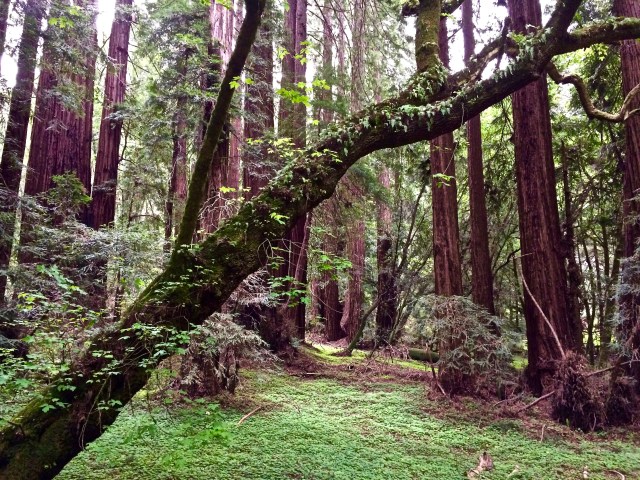
In the world of trees, the biggest, tallest and oldest are 2 varieties of the Sequoia Redwood Tree. The Giant Sequoia trees of the Western Slope of the Sierra Nevada (Yosemite National Park, Sequoia Canyon and Kings Canyon) are the oldest living organisms on earth – ~3,200 years old. They are also the biggest (not tallest) trees in the world. With a diameter of 40 feet and a height over 310 feet they are jaw-dropping huge. I’m sure you have seen pictures of Giant Sequoias that were big enough for the center to be tunneled and a road laid down so a car could drive through the standing tree.
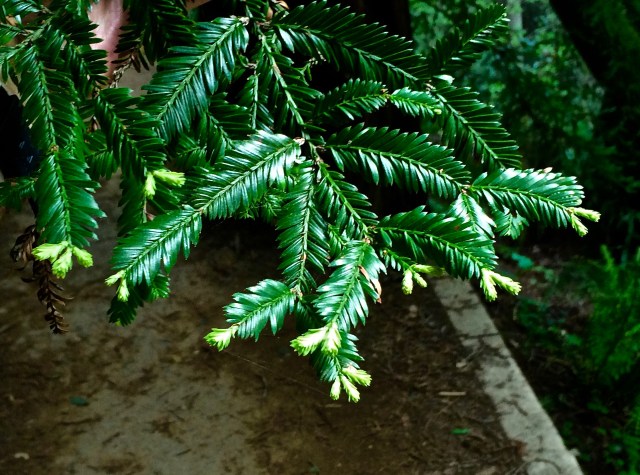
A closely related “cousin” to the Giant Sequoia is the Coastal Redwood (Sequoia sempervirens) that inhabits a thin and discontinuous 500-mile strip along the Pacific coast from southern Oregon to Big Sur California. The Costal Redwood is the tallest tree in the world at ~380 ft. (22 feet in Diameter). It was the Coastal Redwood (a.k.a. California Redwood, a.k.a. Coastal Sequoia) and it’s need for protection that motivated the creation of “Muir Woods National Monument.”
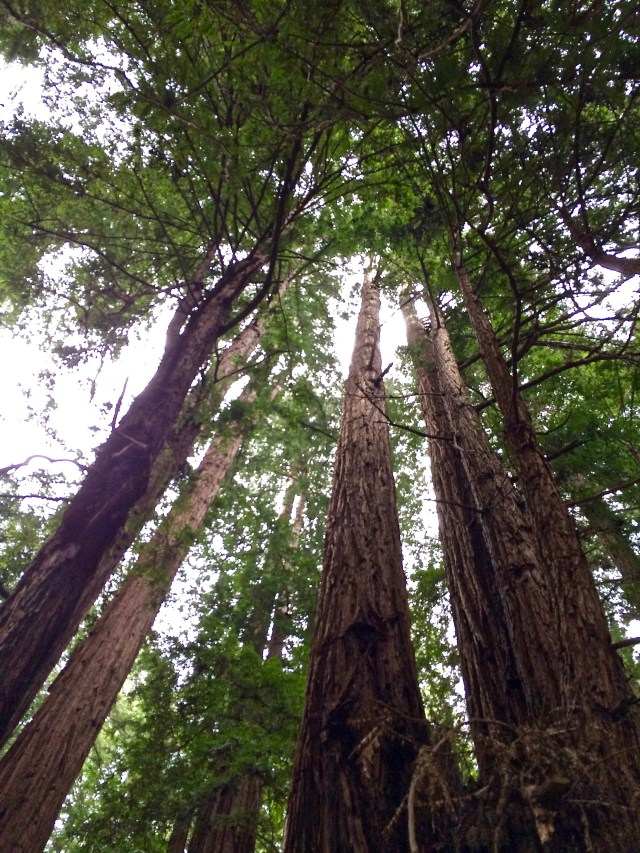
The major players that caused this National Monument to come into existence (William Kent, Teddy Roosevelt and John Muir) would, by there own and following generations, be considered “giants in the Naturalist movement”. And so, we have the giants of naturalists working to save the giants of the forest and in the process creating, in the words of John Muir, “… the best tree-lovers monument that could possibly be found in all of the forests of the world.”
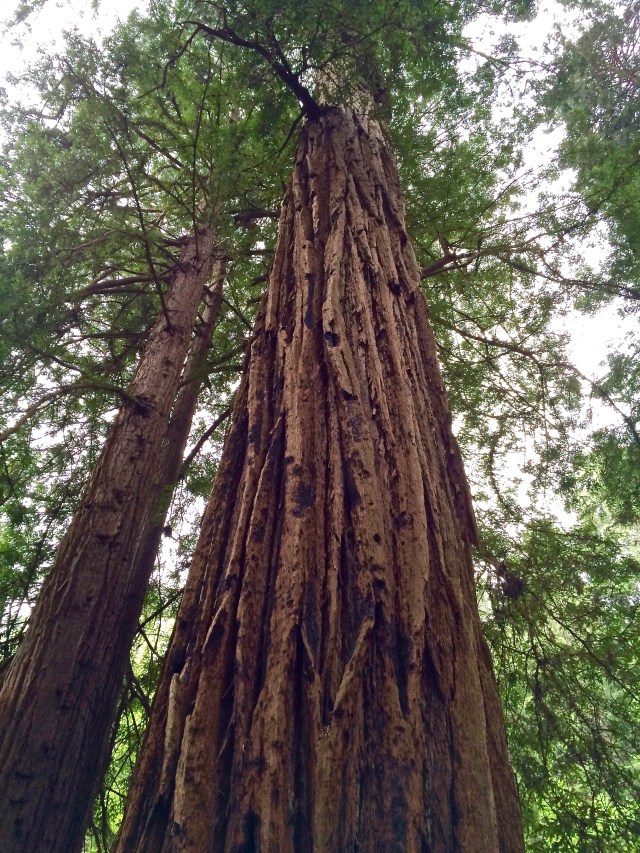
At the end of the Mexican/American War and the beginning of the soon to follow California Gold Rush, migration to the area grew rapidly, requiring wood to build for the exploding population.

William Kent, perhaps the least known of our “Naturalist Giants,” was a successful and very well connected businessman who moved to the area as a child from Chicago. By the 1900’s William Kent and his wife Elizabeth, both lovers of the Northern California natural environment, foresaw the coming extinction of the magnificent Coastal Redwoods.

In a secluded, difficult to access area running through Redwood Canyon, a well-established grove of “Old Growth” Coastal Redwoods remained untouched by the Lumberman’s ax and saw. These trees, located only a few miles from San Francisco, had never been logged due to the difficult accessibility of the canyon. There were other areas, farther away, that provided a more lumberman friendly harvest. In 1905 the Kent’s bought 611 acres centered along Redwood Creek with the intent of saving the Redwoods from the continuing California building boom.

And then, as they say, “the plot thickens.” The following year, early in the morning of April 18th, 1906 the Great San Francisco Earthquake hit and, with the resulting fires, destroyed 80% of San Francisco taking over 3,000 lives and causing about 300,000 people (out of a population of 410,000) to lose their homes. The parks and beaches were jammed with tents and stayed that way for 2 years as San Francisco re-built. The need for wood to rebuild San Francisco posed a serious threat to the Coastal Redwoods of Redwood Canyon.

As if that wasn’t enough, in 1907 a private water company proposed to dam Redwood Creek, thus flooding the canyon in order to create a water supply for Sausalito, CA. They took William Kent to court in an effort to use “eminent domain” and take the land.
William Kent, who later would serve as a member of congress for 3 terms and propose the legislation that would create the National Park Service, was very well connected in Washington DC. He wrote and sent photos to President Teddy Roosevelt proposing that he and his wife donate 295 acres of Old Growth Coastal Redwoods to the government. Roosevelt agreed and in early 1908 declared the land a National Monument, the first ever established from donated land.
Our third and most prominent naturalist is John Muir who was a noted political spokesman and ecological thinker whose enthusiasm and spiritual approach toward nature influenced many to re-think how we use our public lands. He lived less than 50 miles from Redwood Canyon on his father-in-law’s orchard that is now a National Historical Site in Martinez California. Known as “The Father of the National Park System,” he was the key influencer in petitioning the Congress to establish Yosemite National Park and, in the words of Robert Johnson (then editor of Century Magazine) “The voice crying in the wilderness” pleading that we honor our responsibility to cherish and protect the “wild.”
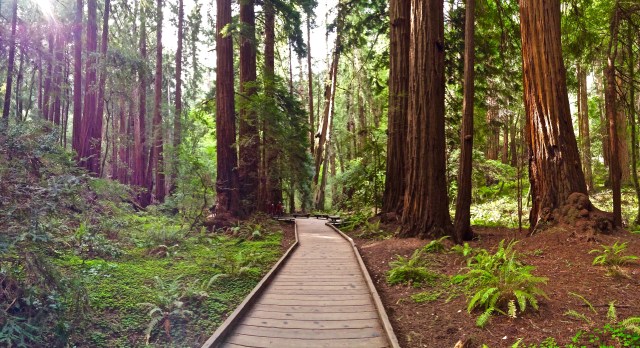
When Kent received word from President Roosevelt that the National Monument had been approved and suggested that the name should be Kent Monument, Kent demurred and requested that it be named after his friend John Muir. Thus Muir Woods National Monument is here for us today.
 Primetime Journey
Joe,
Love reading your posts and the gentle reminder of driving from Albion River Inn north through Mendicino to the Red Woods.
Love ya, Nicki
LikeLike
Another great story Joe. I visited the monument in 1967.
LikeLike
Very well done, enjoy your field trip reports!
LikeLike
Thanks Jim
Joe
LikeLike