
As I travel from one area of this country to another I try to notice and articulate the differences so as to understand the uniqueness of place and to capture at least some of the things that make a place special. When you feel you have a “sense of a place” it is these differences coming to the surface of your unconscious that gives you that “feeling.” The uniqueness of a place lies in hundreds, if not thousands of subtle experiences that we are often barely conscious of and rarely able to articulate. How a place “feels” (everything from architecture, to natural environment, to the prevailing attitudes of the people) is tied to a unique and very complicated web of history, weather, geography, geology, indigenous plants and animals and often times the effects, over time, of interactions between multiple cultures.
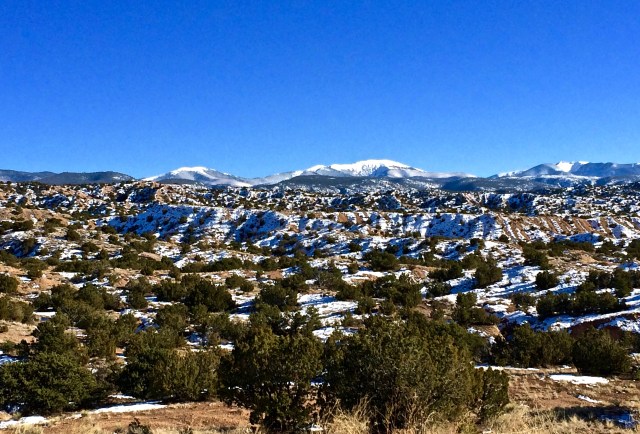
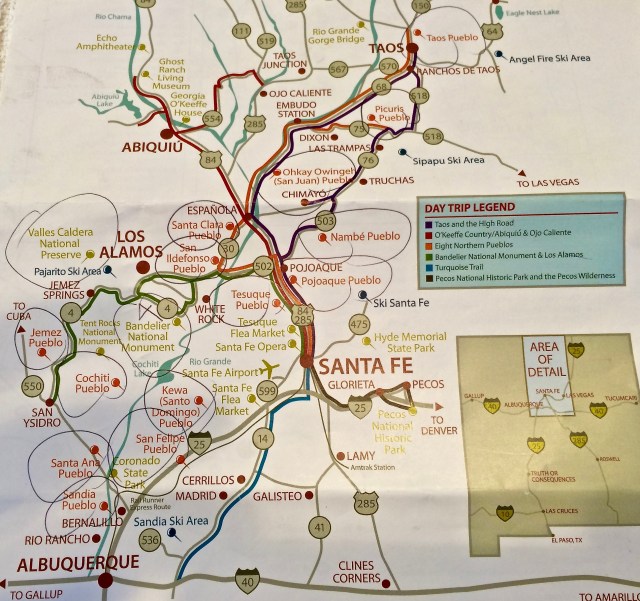
I am now spending a couple of months in the Santa Fe Area and in the early stages of “getting a feel” for the place. When I refer to the Santa Fe Area I am talking about the land that is rimmed on the North by Taos, NM – on the South by Albuquerque, NM – on the West by Los Alamos, NM. and on the East by Las Vegas, NM.
The land is not a desert though it is definitely arid. Immediately around Santa Fe you notice Pinon and Cedar trees mixed with Rabbit Bush, Sage, Yucca, Cholla and various wild grasses. The mountains seem to be in every direction — some up close, others on the horizon. The sky is big, sporting a deep pristine blue during the day and at night it appears as black velvet laced with beckoning diamonds. New Mexicans are proud of their clear skies and do their best to curb light pollution. It is DARK out here and I love it.
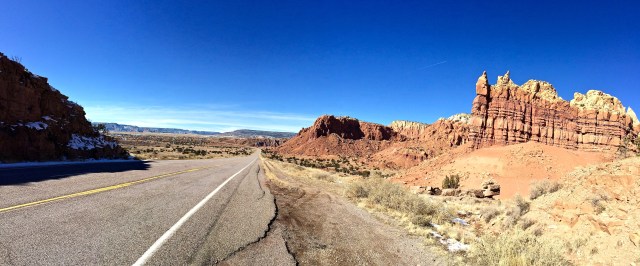
I am drawn to this area as I am to much of the Southwestern U.S., attracted to the openness of the country and largeness of the sky. From the majesty of the mountains to the beauty and serenity of the desert there is an “earthiness” about the environment that captures my attention and guides me to the joy of the present moment.
Historically, it was not an easy place to live off of the land. It was not like the East where an apparent abundance of water lavished the futile land that filled every valley lying between ancient, gentle mountains. It was not like the West where constant moderate weather and fertile soil produced the abundance that comes from a year round growing season.
Seasons came and were often harsh with the absence of moisture in the summer followed by blinding blizzards on the high plains and subzero temperatures in the mountains. It was a tough place to make a living and it evolved resilient, tough people who were forced to rely on themselves and members of their “extended family” (tribe). The Pueblo Indians understand desperation. With the empathy that comes through experience; fortified with Spiritual beliefs centered in the very land they occupy, they helped each other survive. In the process they bonded to each other creating a unique culture that has survived their conversion to Christianity.

The Pueblo people have been living on the same ground since they migrated to this area from the Mesa Verde area around 1300. Unlike the neighboring nomadic Plains and Mountain Indians (Apache, Comanche, Navajo and Ute) the Pueblo stayed put and, in my opinion, represent the “core” of the ever-evolving cultures that now flourish in this place.
By the Late 1500’s the Spanish showed up with Spanish settlers and a considerable amount of livestock. They eventually established the Santa Fe settlement in 1610 just 3 years after the English settled in Jamestown. The Spanish controlled the area for over 200 years converting the Pueblo people to Christianity but never making a lasting peace with the Navajo, Apache, Comanche or Utes.
In 1821 Mexico won its independence from Spain. Once Spain was out of the picture the Mexicans allowed the opening of the Santa Fe Trail from Missouri to Santa Fe, Mexico in an effort to promote trade with the U.S. A little over 25 years later (1847) President Polk sent General Kearny and the “Army of the West” to take what was then Northern Mexico into the United States. (“Manifest Destiny” in action)
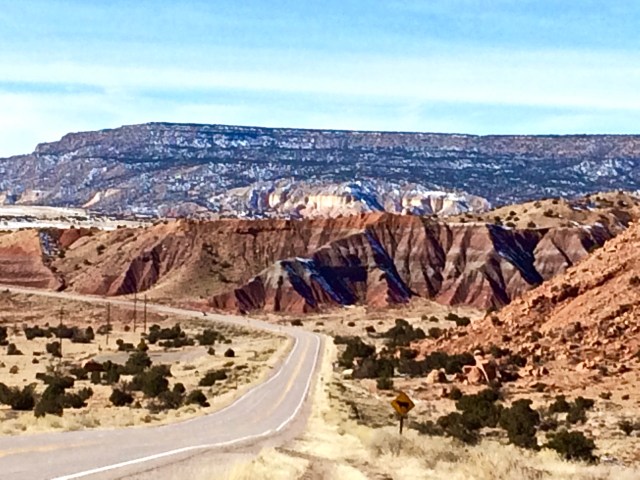
It is important to remember that this was not an area that was inhabited by English speakers that emigrated from the US and then wanted their new home to become part of the US. What is now New Mexico was conquered by the US (even if barely a shot was fired). We were foreigners that spoke a foreign language and the culture (way of being) that we brought was different and at times, at odds with the Native American, Spanish and Mexican cultures that were in place.
This area is “different” and it is with reason that Santa Fe is known as “The City Different.” More about that in future posts.


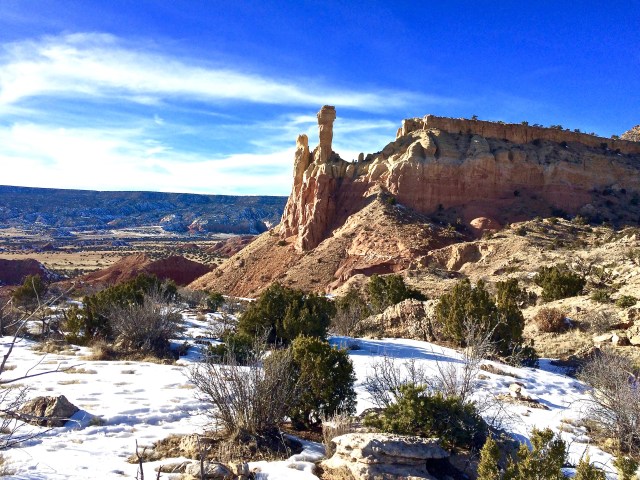
Nice article Joe. It’s Pedernal though. It sounds like you are getting a feel for the area. We’re having a sunny beautiful day here.
Virginia
Sent from my iPhone
>
LikeLike
Glad to have you back out West.
Love the pictures., & your focus on Native American history.
LikeLike